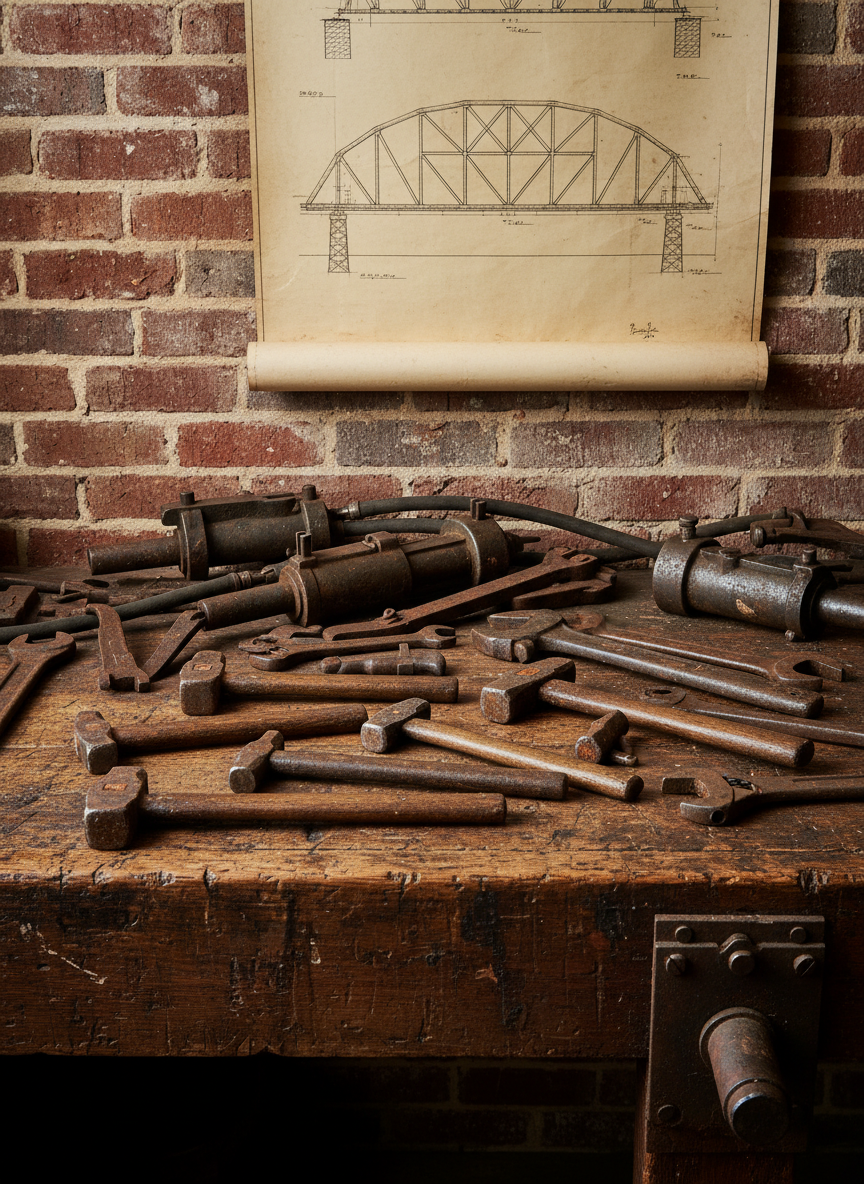
A meticulously arranged collection of vintage ironworking tools displayed on a heavily worn oak workbench, every hammer head, rivet gun, and wrench showing decades of patina, scratches, and darkened steel. Behind them, a large, faded blueprint of a steel truss bridge is pinned to a brick wall, its edges curled and yellowed. Soft, diffused daylight filters through unseen factory windows, creating gentle reflections on the metal surfaces and subtle shadows across the bench. Photographed at eye level with sharp focus throughout, the composition feels archival and documentary, evoking a professional, educational mood. The photographic realism highlights textures of rust, aged wood grain, and paper fibers, creating an authentic visual introduction to ironworker history.

Chapter 1

Founding, early struggles, and landmark projects that shaped Ironworkers Chapter 1’s enduring legacy.

About

Chapter 1 Historical Timeline

Trace the origins of Ironworkers Chapter 1 from its 19th‑century charter through defining strikes, safety reforms, and signature bridge projects, with key dates that highlight how members built both city skylines and a strong union tradition.

An orderly archive table in a quiet institutional reading room, covered with neatly spread historical materials related to Ironworkers Chapters 1–14: leather-bound minute books with embossed gold lettering, typed bylaws in manila folders, brittle newspaper clippings about landmark projects, and a large, unfolded map marked with colored pins showing different chapter locations. The table is medium-toned wood, illuminated by a single green-shaded library lamp that casts warm, focused light, leaving the room beyond in soft shadow. Captured from a slightly elevated angle with a shallow depth of field, the central documents are in crisp focus while the shelves of boxed records blur behind. The atmosphere is scholarly and professional, conveying careful curation and respect for institutional history in a clean, photographic style.