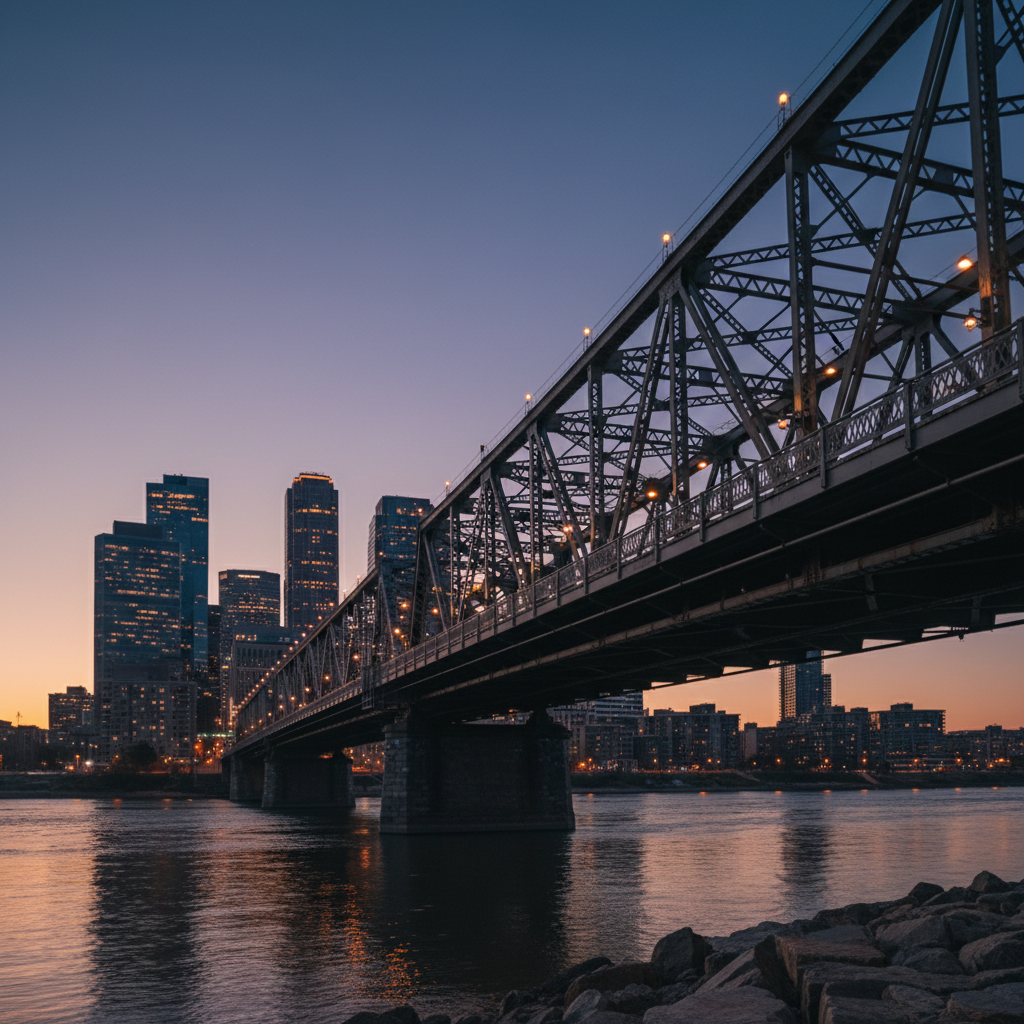
A dramatic, dusk-time cityscape highlighting a partially silhouetted historic steel truss bridge in the foreground, its lattice of iron members rendered in crisp detail, spanning a wide river. Modern high-rises glow faintly in the distant background, contrasting eras of construction. The remaining twilight paints the sky in deep blues and muted purples, while subtle sodium-vapor lights along the bridge cast warm pools that reveal rivets, gusset plates, and railing ornamentation. Photographed from a low vantage at river level with a long lens, the composition compresses distance and emphasizes the bridge’s structural rhythm. The mood is reflective and dignified, underscoring the enduring legacy of early ironworker projects, captured in realistic, high-clarity photographic style tailored to educational storytelling.

Chapter 10

A focused look at ironworkers’ modern era, from transformative projects to hard‑won protections.

Articles

Overview

Chapter 10 traces the rise of modern structural steelwork, spotlighting landmark projects, evolving safety standards, and the ironworkers whose skill and solidarity shaped skylines while redefining what it meant to build together.
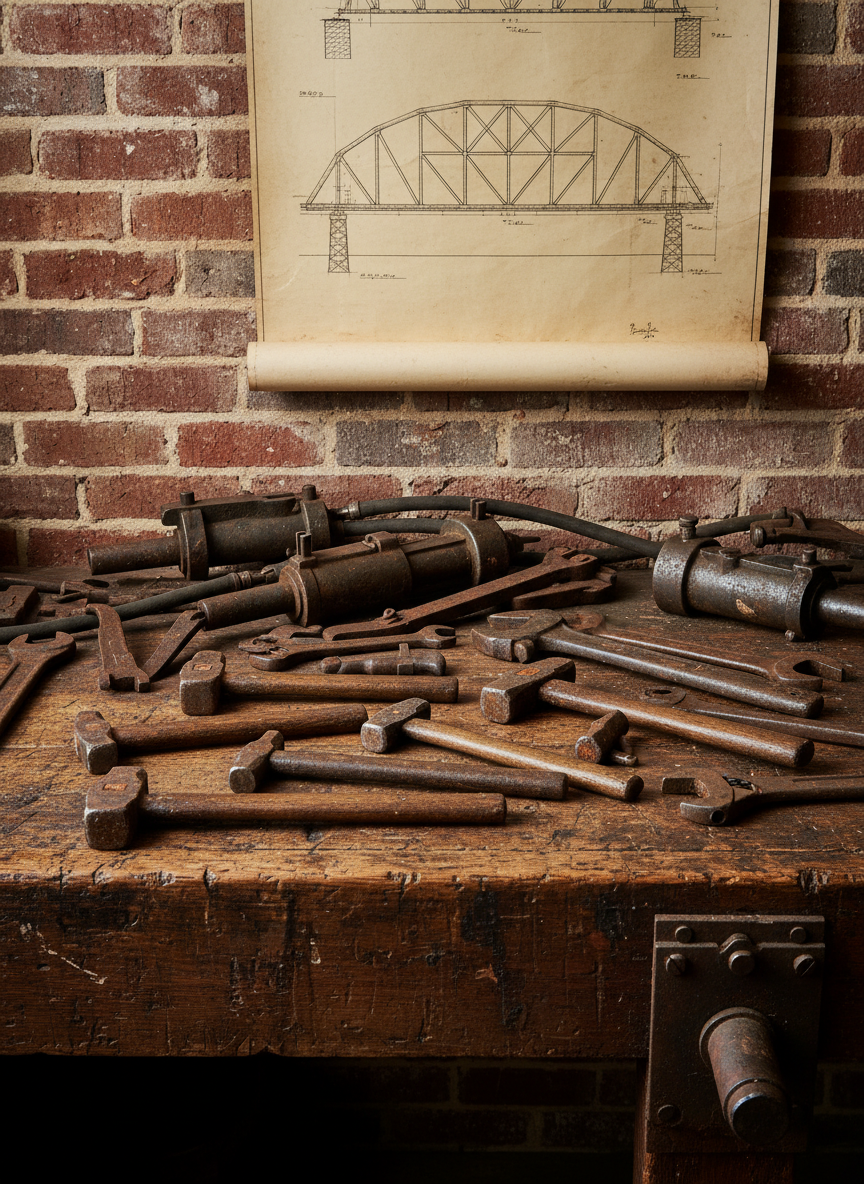
A meticulously arranged collection of vintage ironworking tools displayed on a heavily worn oak workbench, every hammer head, rivet gun, and wrench showing decades of patina, scratches, and darkened steel. Behind them, a large, faded blueprint of a steel truss bridge is pinned to a brick wall, its edges curled and yellowed. Soft, diffused daylight filters through unseen factory windows, creating gentle reflections on the metal surfaces and subtle shadows across the bench. Photographed at eye level with sharp focus throughout, the composition feels archival and documentary, evoking a professional, educational mood. The photographic realism highlights textures of rust, aged wood grain, and paper fibers, creating an authentic visual introduction to ironworker history.