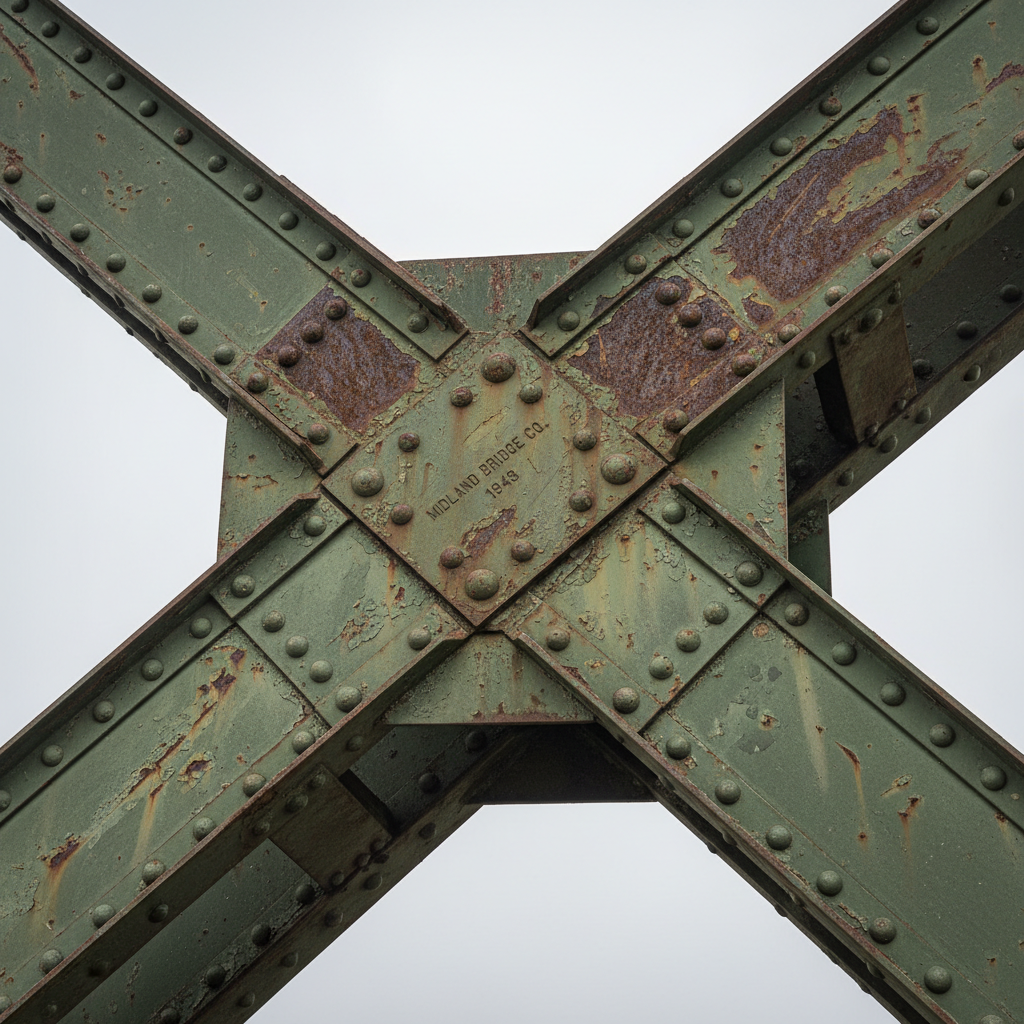
A close-up, documentary-style photograph of a heavily riveted steel bridge joint from the mid-1900s, showing intersecting girders painted in faded industrial green, with layers of peeling paint, rust blooms, and stamped manufacturing marks still visible. The structure rises diagonally across the frame, set against an overcast sky that provides soft, even lighting with no harsh shadows, allowing every bolt head and weld line to stand out. Shot from a low-angle perspective, the composition emphasizes the strength and precision of ironworker craftsmanship. The mood is analytical and educational, focusing on engineering detail rather than drama. Photographic realism captures the micro-texture of corroded metal and weathered coatings to support technical discussions of historic steel connections.

Chapter 5

Brief chapter introductions spotlight pivotal events, agreements, and leaders in Ironworkers history.

Casebook

Overview

Concise study notes trace Ironworkers Chapters 1–14, highlighting milestones, contracts, and key union struggles for quick learner reference.
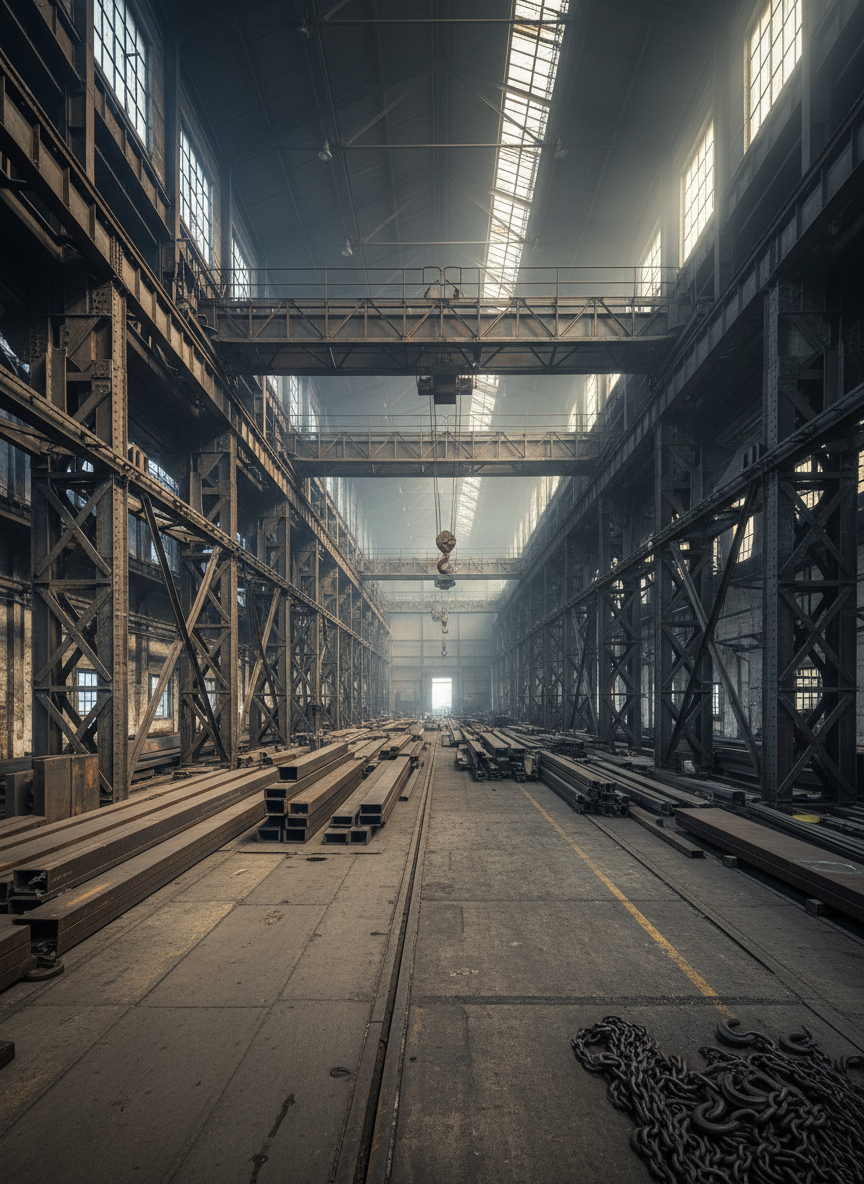
A panoramic interior of an early 20th-century steel mill bay, devoid of workers, lined with massive riveted I-beams, overhead gantry cranes, and stacked steel girders. The concrete floor is stained and scored, scattered with neatly arranged chains and hooks that gleam slightly from use. High clerestory windows admit hazy, late-afternoon industrial light, streaming in shafts that catch floating dust and illuminate the structure of the trusses above. The mood is solemn and historical, emphasizing the scale and engineering prowess of the era. Captured with a wide-angle, slightly elevated perspective in photographic realism, the composition uses strong leading lines from the beams and rails to draw the eye deep into the scene, ideal for illustrating foundational ironworking environments.